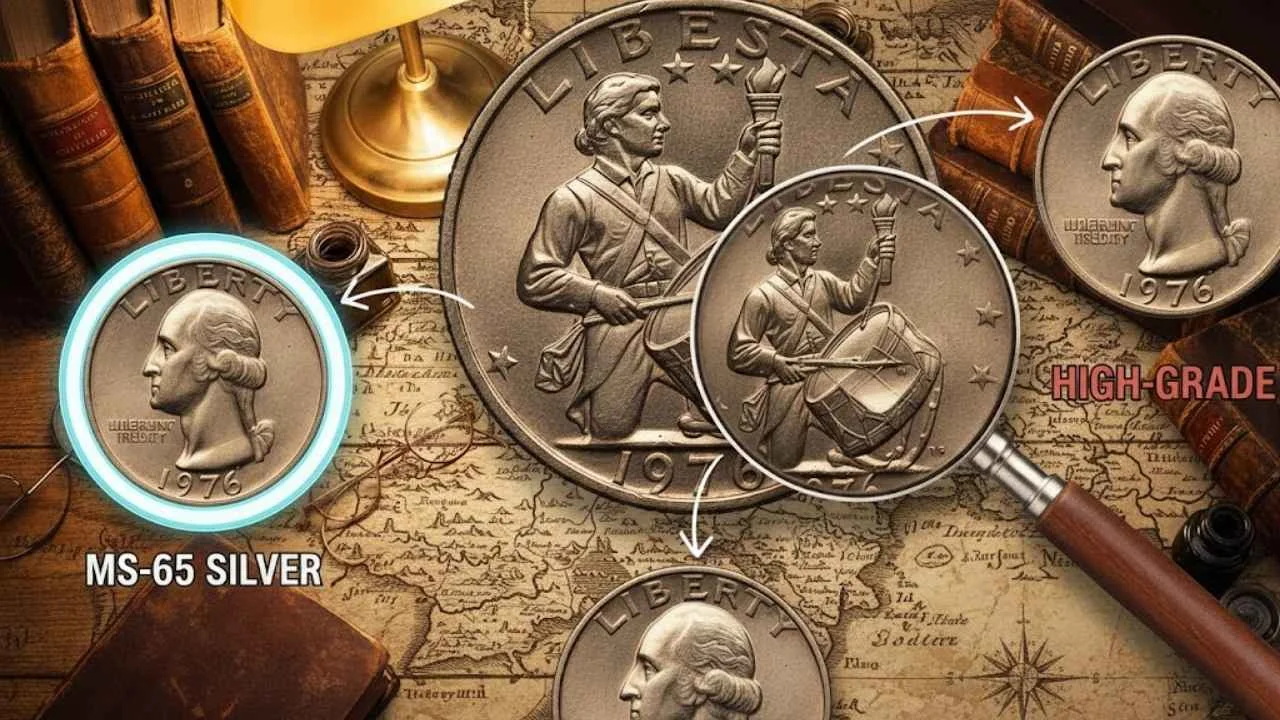
The 1976 Bicentennial quarter remains one of the most recognizable U.S. coins ever produced, featuring a unique dual-date design honoring America’s 200th anniversary. As collectors look ahead to 2026, interest in Bicentennial quarters continues to grow, especially for rare versions, error strikes and higher-grade examples that still surface in circulation. While most Bicentennial quarters are common and worth face value, specific varieties and conditions can command significantly higher prices, making it worthwhile to understand what to look for.
Why the 1976 Bicentennial Quarter Is Special
The Bicentennial quarter was issued in 1975 and 1976 with a dual date of 1776–1976 and a special reverse design depicting a colonial drummer. Unlike regular quarters, these coins were produced at multiple mints and in different compositions, including copper-nickel clad and limited silver versions. Their historical significance and distinctive design make them popular among both casual collectors and serious numismatists, keeping demand steady even decades after release.
Most Valuable Bicentennial Quarter Types
Not all 1976 Bicentennial quarters are equal in value, and certain types stand out in the collector market. Silver composition quarters, proof strikes and high-grade uncirculated examples are the most desirable. Coins with sharp details, strong luster and minimal wear consistently sell for higher prices, especially when professionally graded. As 2026 approaches, demand for premium examples is expected to remain strong due to their limited availability.

Error Coins That Increase Value
Error coins are one of the biggest drivers of value for Bicentennial quarters. Errors such as doubled dies, off-center strikes, clipped planchets and misaligned dies can significantly raise a coin’s worth. These errors occurred during the minting process and were not intentional, making them scarce. Well-documented error varieties often attract competitive bidding among collectors, particularly when the error is clear and the coin remains in good condition.
Trump Calls US Troops on Christmas Eve, Announces Tax-Free ‘Warrior Dividend’ and Pay Raise

Circulation Finds Still Possible in 2026
One of the most appealing aspects of Bicentennial quarters is that they can still be found in everyday pocket change. Millions were produced, and many remain in circulation, especially clad versions. While most circulated examples are worth only 25 cents, sharp-eyed collectors occasionally find higher-grade coins or subtle errors that increase value. Checking rolls from banks and closely inspecting change remains a practical way for hobbyists to search for potential finds.

Estimated Values to Watch in 2026
| Bicentennial Quarter Type | Typical Value Range |
|---|---|
| Circulated Clad Quarter | $0.25 – $1 |
| Uncirculated Clad (High Grade) | $5 – $20 |
| Silver Composition Quarter | $8 – $30 |
| Proof Bicentennial Quarter | $10 – $40 |
| Major Error Coin | $100 – $1,000+ |
Values depend heavily on condition, demand and certification.
How Condition Impacts Value
Condition is one of the most critical factors in determining a Bicentennial quarter’s value. Coins graded in mint-state condition with minimal marks and strong strike details are far more valuable than worn examples. Even common varieties can increase significantly in price if preserved well. Collectors often recommend storing potential finds properly and considering professional grading for coins that appear unusually sharp or rare.

Trump’s ‘Warrior Dividend’ Payments Are a MASSIVE Scam: What’s Really Going On?
Should You Hold or Sell in 2026
For collectors, holding high-quality or error Bicentennial quarters into 2026 may be worthwhile, as interest often rises around milestone anniversaries. Casual finders, however, may choose to sell notable examples when market demand is strong. The decision depends on the coin’s rarity, condition and personal collecting goals. Monitoring auction trends and collector interest can help determine the best timing.
Final Thoughts
Rare 1976 Bicentennial quarters continue to capture collector attention due to their historical importance, unique design and the possibility of valuable errors still appearing in circulation. While most examples remain common, knowing what to look for can help collectors and everyday users identify coins that may be worth more than face value in 2026.
