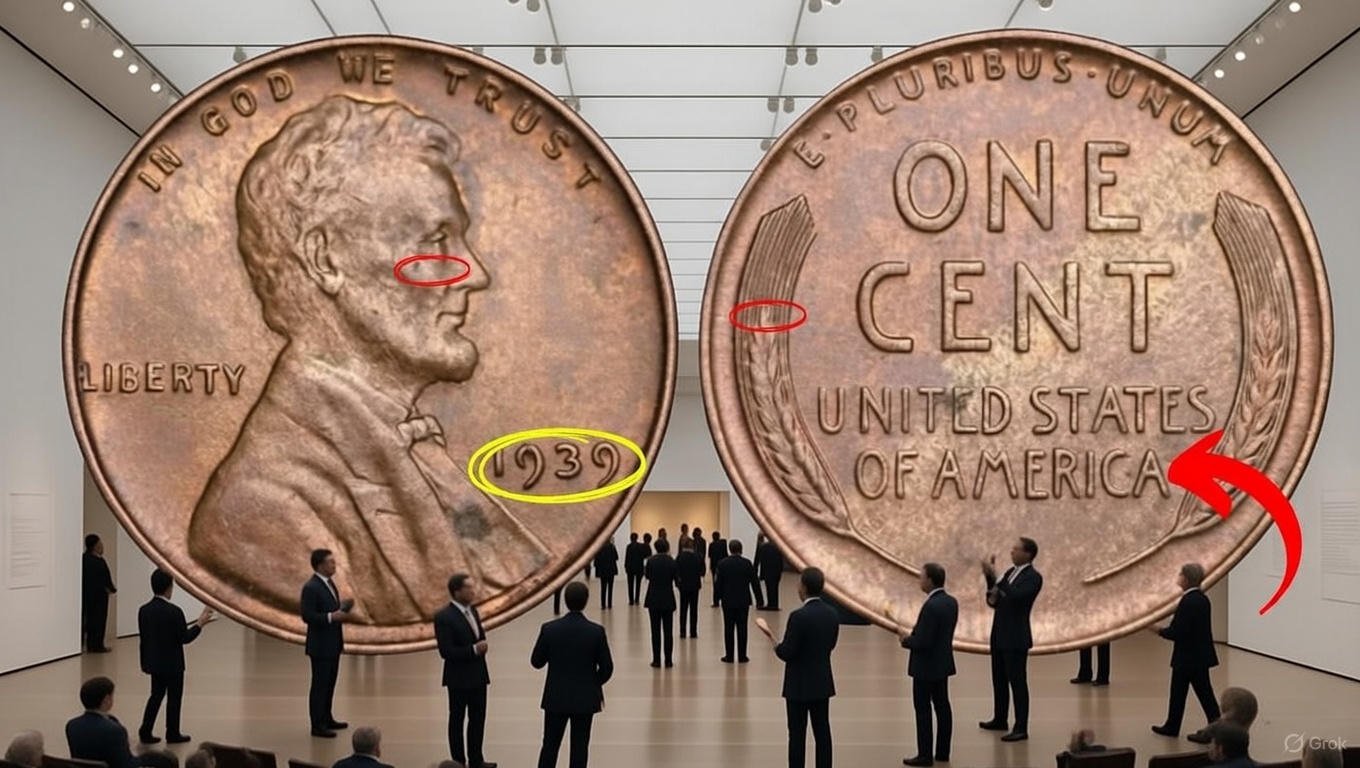
The Lincoln Wheat Penny, minted from 1909 to 1958, is one of the most collected and recognizable U.S. coins. Featuring Abraham Lincoln on the front and two wheat ears on the reverse, this series marked a turning point in American coinage and remains a favorite among beginners and seasoned collectors alike. While many wheat pennies are common, certain dates, mint marks, and errors can be worth hundreds—or even thousands—of dollars today.
What Determines the Value of a Wheat Penny?
Not all wheat pennies are created equal. Several factors play a key role in determining their market value:
1. Year and Mint Mark
Wheat pennies were struck at three mints:
-
Philadelphia (no mint mark)
-
Denver (D)
-
San Francisco (S)
Coins from certain years and mints had lower production, making them scarcer and more valuable.

2. Condition (Grade)
Coins are graded from heavily worn to uncirculated. A penny in Mint State condition can be worth many times more than the same coin in circulated condition.
3. Key Dates and Rarities
Some years are considered “key dates” because of low mintage or high demand, such as 1909-S VDB and 1914-D.
4. Errors and Varieties
Mistakes during minting—like doubled dies or wrong metal compositions—can dramatically increase value.
SNAP Payments December 25-28, 2025: State Wise Beneficiary List Released
Wheat Penny Value Chart (1909–1958)
Approximate values for circulated coins; higher grades can be worth significantly more.

| Year | Mint | Estimated Value | Notes |
|---|---|---|---|
| 1909 | No Mint | $1 – $3 | First year of issue |
| 1909 VDB | No Mint | $5 – $20 | Designer initials on reverse |
| 1909-S VDB | S | $1,000 – $10,000+ | Most famous key date |
| 1914-D | D | $800 – $1,500 | Major rarity |
| 1922 | No Mint (No D) | $500 – $1,200+ | Popular error coin |
| 1931-S | S | $200 – $500 | Low mintage |
| 1943 Steel | No Mint | $0.50 – $5 | Steel wartime penny |
| 1943 Bronze (Error) | — | $50,000+ | Extremely rare |
| 1955 Doubled Die | No Mint | $800 – $1,500+ | Strong doubling visible |
| 1958 | No Mint | $0.10 – $0.50 | Last year of wheat design |
Note: Prices vary widely depending on condition, demand, and authentication.
Most Valuable Wheat Pennies to Look For
1909-S VDB
The holy grail of wheat pennies. With very limited production, this coin is highly sought after and commands premium prices.
1914-D
A low-mintage Denver issue that is difficult to find in good condition.
1922 No D
An unusual error where the Denver mint mark is missing, making it one of the most famous penny errors.
1943 Bronze Penny
Accidentally struck on copper instead of steel during World War II, this is one of the rarest U.S. coins ever produced.
1955 Doubled Die Obverse
Clear doubling on the date and lettering makes this error easy to identify and extremely collectible.

Market Insights for Collectors
-
Condition is king: A small improvement in grade can mean a big jump in value.
-
Authentication matters: Rare wheat pennies should be professionally graded to confirm authenticity.
-
Common doesn’t mean worthless: Even common wheat pennies are usually worth more than face value, especially from earlier decades.
-
Long-term appeal: Wheat pennies have remained popular for decades due to history, affordability, and nostalgia.
CRA Releases $1,350 December Payout Plan: CHeck Updated Amount & Eligibility Here

Final Thoughts
The 1909–1958 Wheat Penny series offers a perfect mix of history, affordability, and hidden treasures. Whether you’re checking old jars or building a serious collection, understanding dates, mint marks, and condition can help you spot coins that are far more valuable than they appear. Sometimes, a single penny really can be worth a fortune.
Frequently Asked Questions (FAQs)
Q1: Are all wheat pennies valuable?
No. Many common dates from the 1940s and 1950s are worth only a few cents to a dollar unless they are in excellent condition.
Q2: How can I tell if my wheat penny is rare?
Check the year, mint mark, and look for known key dates or visible errors such as doubling or missing mint marks.
Q3: Should I clean my wheat pennies?
No. Cleaning can significantly reduce a coin’s value by damaging its original surface.
Q4: Are wheat pennies a good investment?
They can be, especially key dates and error coins. However, values depend on condition and market demand.
Q5: What replaced the wheat penny after 1958?
In 1959, the wheat design was replaced with the Lincoln Memorial reverse.
