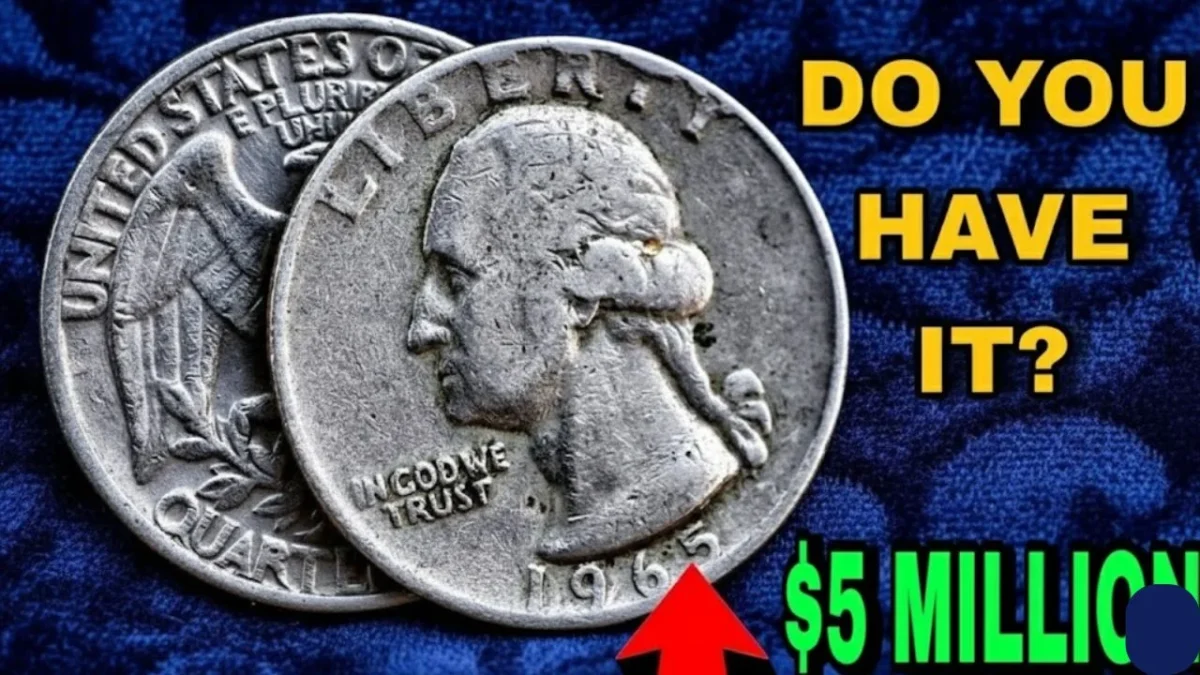
Rare Washington quarters worth a fortune in 2025: For many, a quarter is simply a piece of everyday currency. Yet, within the world of numismatics, certain Washington quarters have transcended their face value, becoming cherished historical artifacts and, for some, valuable assets. As we progress through 2025, a growing number of enthusiasts, from seasoned collectors to curious beginners, are taking a closer look at their change jars and inherited collections. This renewed interest isn’t about fleeting trends; it’s a recognition of the stories minted in silver and copper-nickel, where rarity and condition converge to create modern-day treasure.
Understanding the Resurgence of a Numismatic Staple
First introduced in 1932 to honor the bicentennial of George Washington’s birth, this coin served as a workhorse of American commerce for generations. Today, its journey from pocket change to collectible is fueled by several key factors. The sustained value of precious metals provides a foundational worth for older issues, while the digital age has connected a global community of collectors, allowing knowledge and discovery to spread rapidly. Furthermore, the pursuit of “registry sets”—where collectors compete to assemble the highest-graded series—has intensified demand for pristine specimens. This environment means that a coin once used to buy a loaf of bread could now hold a place of honor in a display case, valued for its history and preservation.
Washington Quarter Reference Table: Key Dates and Varieties
| Date & Mintmark | Mintage | Notable Feature | Primary Reason for Value |
|---|---|---|---|
| 1932-D | 436,800 | Low Mintage | One of the key inaugural year issues; scarce in any condition, extremely rare in high grade. |
| 1932-S | 408,000 | Low Mintage | The other key 1932 issue; survival in mint state is exceptionally low. |
| 1934 | (P) Only | Doubled Die Obverse | Strong doubling visible on the motto “IN GOD WE TRUST.” A notable error variety. |
| 1943 | (P) Only | Doubled Die Obverse | Distinct doubling on the date and “LIBERTY.” A popular error coin from the WWII era. |
| 1950-D | N/A | Overmintmark (D over S) | The “D” mintmark was punched over a leftover “S” die. A clear and valuable variety. |
| 1950-S | N/A | Overmintmark (S over D) | The “S” mintmark was punched over a “D.” The counterpart to the D over S. |
| 1970-S | Proof Only | Struck on 40% Silver Planchet | Proof issue struck on the wrong metal blank. Great rarity from the clad era. |
| Any Quarter | 1964 or Earlier | 90% Silver Composition | All pre-1965 quarters have significant bullion value based on silver content. |
Trump’s New $2000 Stimulus Plan Explained: Payment Dates, Eligibility & Latest Updates

Identifying Quarters with Notable Collectible Interest
While the majority of quarters remain common, specific dates, mintmarks, and production anomalies are highly sought after. The landscape is broadly divided by the coin’s composition change in 1965.
- The Silver Era (1932-1964): These quarters, composed of 90% silver, carry both intrinsic metal value and collectible premium. The keys to this period are the low-mintage 1932 issues from the Denver (D) and San Francisco (S) mints. Surviving examples in outstanding condition are cornerstones of advanced collections. Other notable coins from this period include various overmintmark errors and doubled dies, such as the 1943 example, where a misalignment in the stamping process creates a distinctive, visible doubling of the design.
- The Clad Era (1965-Present): After 1964, quarters were made from copper-nickel cladding. Although most are common, dramatic errors can create significant value. A famous example is the 1970-S proof quarter struck on a silver planchet intended for a different coin. These unintended minting stories are what make the hunt so compelling, proving that rarity can appear in any era.
A Starter Guide for Examination and Discovery
Beginning your search can be both exciting and straightforward. Follow these steps to examine coins methodically:
- Date and Mintmark: Locate the year and the small letter indicating its mint of origin: “D” for Denver, “S” for San Francisco, or no mintmark for Philadelphia.
- The Edge Test: A quick glance at the coin’s edge is revealing. Quarters from 1964 and earlier have a solid silver edge, while those from 1965 onward show a distinct copper-colored band sandwiched between layers of nickel.
- Condition is Paramount: A coin’s state of preservation is its most critical attribute. Look for sharp details, minimal wear on high points like Washington’s hair, and original surface quality. Coins that have been harshly cleaned or damaged lose most of their numismatic appeal.
- Seek the Unusual: Train your eye to look for anomalies—misaligned strikes, off-center designs, or doubling of letters and dates. A magnifying glass and a good light source are essential tools.
MoneyRanked: The World’s Most Powerful Reserve Currencies

Navigating the 2025 Market as a Global Collector
The current auction landscape demonstrates robust, knowledgeable demand. While top-tier, flawlessly graded coins achieve record prices, there is a healthy market for honestly circulated key dates, making the hobby accessible. For collectors outside the United States, engaging with this market successfully involves a few best practices. Always prioritize coins that have been professionally authenticated and graded by leading services like PCGS or NGC. This encapsulation verifies authenticity, guarantees the grade, and provides market liquidity. Consider all associated costs, including secure shipping and potential import regulations. Building relationships with local coin clubs or trusted dealers can provide essential guidance and help you avoid common pitfalls like altered coins or misunderstood valuations.
Frequently Asked Questions (FAQ)
Q: I found a 1932 Washington quarter. Is it automatically valuable?
A: Not necessarily. If it has no mintmark (from Philadelphia), it is a common coin unless in exceptional, uncirculated condition. The valuable 1932 issues are those with the “D” (Denver) or “S” (San Francisco) mintmarks.

Q: What does “graded” mean, and why is it important?
A: Grading is a standardized assessment of a coin’s condition on a scale from 1 (Poor) to 70 (Perfect Mint State). Professional grading services (PCGS, NGC) encapsulate coins in tamper-evident holders with a certified grade. This takes the guesswork out of condition, ensures authenticity, and is the market standard for trading valuable coins.
Q: How should I clean old coins I find?
A: The universal advice from experts is do not clean your coins. Even gentle cleaning can permanently damage the original surface (patina) and dramatically reduce the coin’s collectible value. The best practice is to handle coins by the edges and store them in proper, non-PVC holders.
Q: Are modern quarters from the 2000s worth saving?
A: General circulation quarters are still just face value. However, you can look for errors and the special issues from the America the Beautiful Quarters program (2010-2021) or the American Women Quarters program (2022-2025) in superb, uncirculated condition. Proof sets and silver proofs of these modern issues have collectibility.

Q: Where is the best place to learn more and get coins evaluated?
A: Start with reputable numismatic websites and books. For evaluation, consider joining a local coin club or attending a coin show where dealers can offer informal opinions. For a formal valuation on potentially high-value pieces, submitting them to a professional grading service is the definitive step.
